Imagine standing under the spotlight at a used car auction. Before you sits a vehicle with a mirror-like finish, its polished surface reflecting dazzling light. The salesperson passionately declares it to be "in pristine condition with original factory paint." Your heart races as you reach for your wallet. But wait—what if beneath this glossy facade lies thick filler from a severe collision or traces of crude metalwork repairs?
Now shift your perspective to a precision manufacturing plant. Consider a steel bridge spanning a mighty river, its thin anti-corrosion coating serving as the last line of defense against relentless weathering. If the coating is too thin, rust will spread like wildfire within years. Too thick, and you'll face not just material waste but potential cracking from uneven stress distribution.
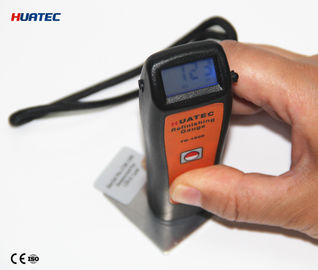
In these high-stakes commercial and industrial scenarios, an unassuming yet powerful tool emerges—the coating thickness gauge, commonly called a "paint meter." Today, we delve into this "industrial polygraph," examining its underlying physics and practical applications.
I. The Physics Behind the Magic: How Gauges See Through Materials
Many wonder: How can these devices measure paint thickness without disassembling parts or damaging surfaces? The answer lies not in magic but in precise electromagnetic calculations.
Modern professional-grade coating thickness gauges (such as the Phase II PTG-4000 and PTG-5500 series) have become industry standards by integrating two core physical principles: magnetic induction and eddy current technology.
-
1. Magnetic Induction: The "Field Conservation" of Steel
Designed specifically for ferrous metals (like standard automotive steel), this method works by generating a constant magnetic field from the probe's internal coil. Since the base metal is magnetic, it disturbs this field. The coating thickness essentially represents the "distance" between the probe and metal substrate. As this distance increases, magnetic flux changes accordingly, and the device's microprocessor converts these variations into micron-level readings.
-
2. Eddy Current: The "Inductive Dance" of Non-Ferrous Metals
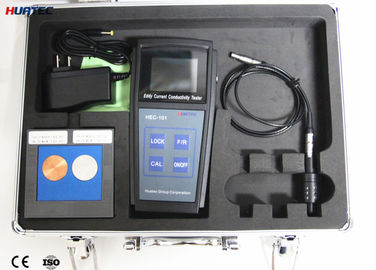
When measuring insulating coatings on aluminum, copper, or stainless steel, magnetic induction fails. Here, eddy current technology takes over. The probe generates high-frequency alternating magnetic fields, inducing "edd y currents" on non-ferrous metal surfaces. Thicker coatings weaken these currents, and by measuring the probe coil's impedance feedback, the device calculates coating thickness.
The most remarkable feature of advanced models is their automatic recognition capability. No manual mode switching is needed—the probe instantly identifies the material and adjusts its measurement logic, making it indispensable in complex industrial environments.
II. The Used Car Industry's "Truth Mirror": Spotting Refurbished Deceptions
In used vehicle transactions, paint meters have transitioned from optional tools to essential equipment for professional appraisers.
Why are they called "truth mirrors"? Because factory paint and repair work differ fundamentally. Original coatings, typically applied by robotic systems, maintain extremely consistent thickness (usually 100-150μm) with minimal variation across surfaces.
After collision repairs, technicians use body filler (bondo) to smooth dents. This material is inherently thicker and harder to apply as evenly as factory paint. Subsequent manual repainting often pushes coating thickness to 300μm or beyond. When your paint meter detects a sudden jump from 120μm to 500μm on a panel, you've uncovered irrefutable evidence of the vehicle's accident history.
For insurance adjusters and dealership buyers, these devices not only reveal past damage but also evaluate refurbishment quality. Without professional instruments, even trained eyes can be fooled by skilled refinishing, leading to costly valuation errors. Paint meters protect both consumers' investments and market integrity.
III. Industrial Guardianship: The Economics of Precision
Beyond automotive applications, coating thickness gauges serve as critical quality control tools in manufacturing and engineering.
For machinery, steel structures, and construction projects, coatings aren't just about aesthetics—they're vital for corrosion prevention. Coating thickness directly impacts infrastructure lifespan. Insufficient protection exposes metal to oxidation, risking structural failures. Excessive thickness wastes materials, increases costs, and may cause coating brittleness that leads to cracking under stress.
As a non-destructive testing (NDT) solution, these gauges allow engineers to monitor spray processes in real-time without surface damage. This immediate feedback enables production lines to adjust spray pressure and speed dynamically, ensuring every product meets stringent specifications.
IV. Best Practices: Ensuring Measurement Accuracy
Owning advanced equipment doesn't guarantee accurate results. Follow these protocols for reliable measurements:
-
1. Calibration Is Non-Negotiable
Always calibrate using included standard shims before measurements. Minor material differences or temperature fluctuations can skew readings. Never skip this step.
-
2. Adopt Multi-Point Sampling
Never rely on single-point measurements. Compare data from multiple areas to understand coating distribution. For example, when checking a car door, measure at least three points (top, middle, bottom) to distinguish spot repairs from full repaints.
-
3. Minimize Environmental Interference
While modern devices resist interference well, extreme heat or strong magnetic fields may require special handling per manufacturer guidelines. Always position probes perpendicular to surfaces with consistent pressure to prevent skewed readings.
As industrial precision advances, coating thickness gauges have evolved from laboratory instruments to indispensable commercial tools. They serve not just technicians but also uphold fair transactions and product quality standards.
In an era of information asymmetry, we may not master every field, but we can trust data. Next time you inspect a potential purchase or evaluate an industrial coating, let a paint meter guide you—because every micron reading represents respect for truth and value.


 Mesajınız 20-3.000 karakter arasında olmalıdır!